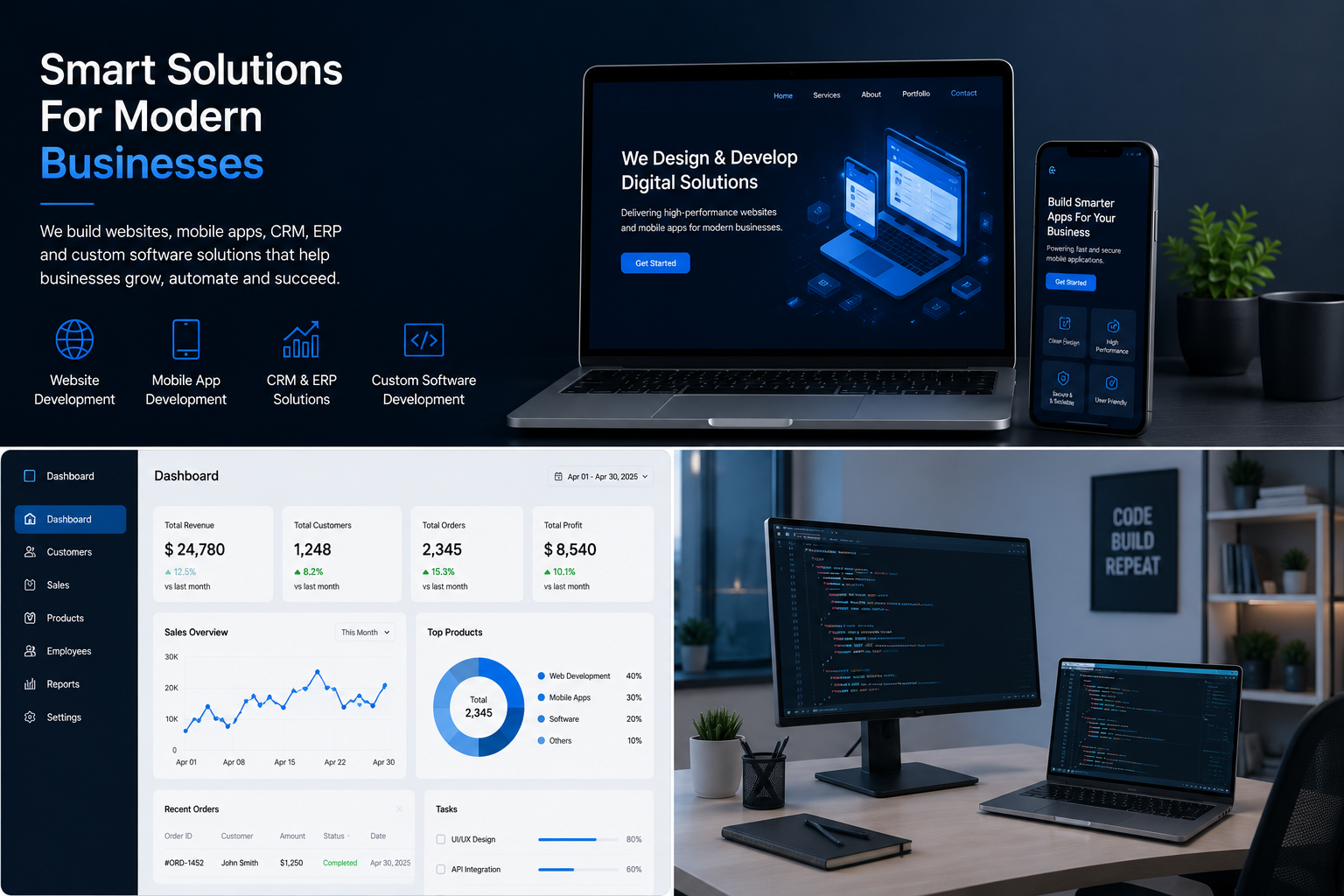

Software development is evolving at an unprecedented pace, driven by rapid advancements in technology and changing business needs. As we move into a more digital-first world, the future of software development will be shaped by innovation, automation, and smarter solutions that redefine how applications are built and delivered.
Artificial Intelligence is becoming a core part of software development. AI-powered tools can now assist developers in writing code, detecting bugs, and optimizing performance. This not only speeds up the development process but also improves code quality and efficiency.
In the future, AI will play a bigger role in automating repetitive coding tasks, allowing developers to focus more on creativity, architecture, and problem-solving.
Low-code and no-code platforms are transforming how applications are built. These platforms allow businesses to develop software with minimal coding, making development accessible to non-technical users.
While traditional development will always be important, these platforms will continue to grow, helping startups and enterprises build solutions faster and at a lower cost.
Cloud computing is already a backbone of modern applications, and its role will only expand. Cloud-native development enables businesses to build scalable, flexible, and highly available applications.
Technologies like microservices and containerization allow developers to create modular applications that can be easily updated and scaled as needed.
As software becomes more advanced, so do cyber threats. The future of software development will place a strong emphasis on security at every stage of development.
Practices like secure coding, regular testing, and real-time monitoring will become essential to protect applications and user data.
DevOps practices are streamlining the development lifecycle by integrating development and operations. Automation tools help in continuous integration and continuous deployment (CI/CD), ensuring faster and more reliable releases.
This approach reduces downtime, improves collaboration, and enhances overall productivity.
Businesses today want applications that work seamlessly across multiple platforms—web, Android, and iOS. Cross-platform development frameworks are gaining popularity as they allow developers to build apps for multiple platforms using a single codebase.
This saves time, reduces costs, and ensures consistency across devices.
The future of software development is not just about functionality—it’s also about experience. User-centric design focuses on creating intuitive, engaging, and accessible applications.
Developers and designers will work closely to ensure that applications meet user expectations and provide a seamless experience.
Technologies like Internet of Things (IoT), blockchain, and augmented reality (AR) are opening new possibilities in software development. These innovations are enabling businesses to create smarter and more interactive applications.
As these technologies mature, they will become an integral part of modern software solutions.
The future of software development is dynamic, innovative, and full of opportunities. Businesses that embrace new technologies and adapt to changing trends will be better positioned for success. By focusing on AI, automation, security, and user experience, companies can build powerful software solutions that meet the demands of tomorrow.